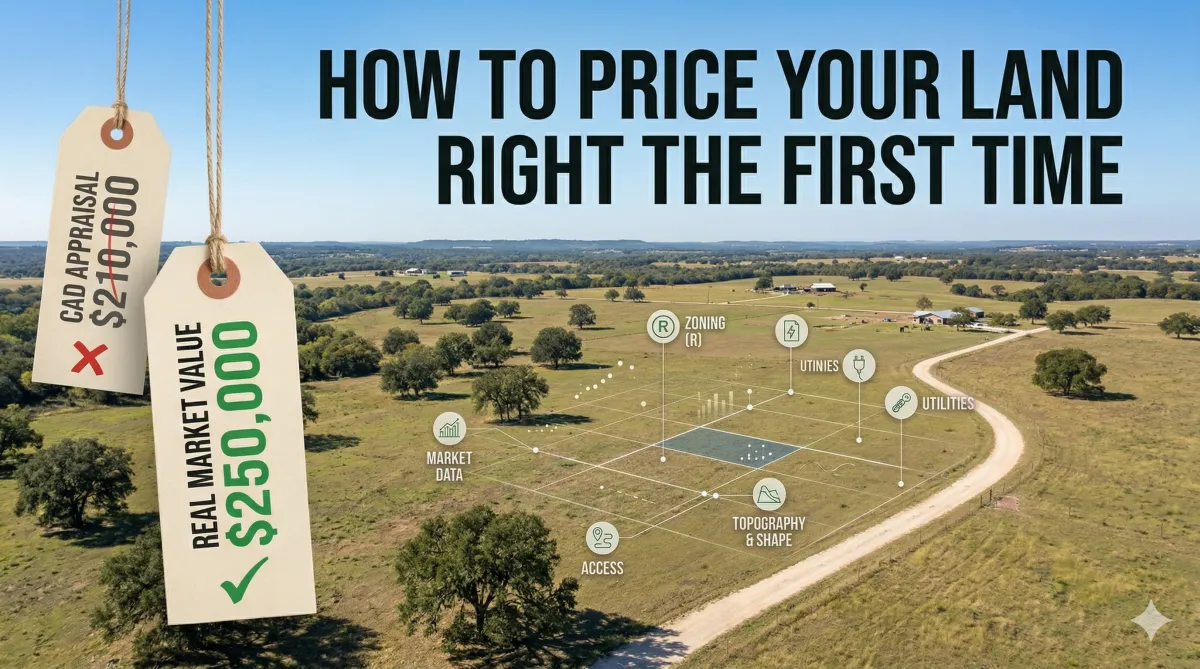
How to Price Your Land Right the First Time
How to Price Your Land Right the First Time
By Bhaskar Pandey, Land Wholesaler & Broker, Builders Land Source
Let’s start with a story I’ve seen play out too many times: A landowner in Texas decides it’s time to sell. They’ve heard about rising prices, maybe even seen a neighbor’s property go for a hefty sum. So, they set their price high—higher than the market, just to “see what happens.” Days turn into weeks, weeks into months, and not a single serious offer comes in. The excitement fades, frustration sets in, and eventually the price drops—sometimes more than once. By the time the land finally sells, it’s for less than it could have fetched if it had been priced right from the start. Sound familiar? If so, you’re not alone. I’ve closed over a hundred land transactions in Texas, and I can tell you: pricing land is one of the most misunderstood—and most important—steps in the selling process.
Let’s break down how to price your land right the first time, avoid the most common pitfalls, and make your sale a success.
CAD/Appraisal Value vs. Real Market Value: Don’t Get Fooled
One of the first things many landowners look at when thinking about price is the county’s appraised value—known as the CAD (Central Appraisal District) value in Texas. It’s tempting to use this as your benchmark, but here’s the reality: the CAD value is for property tax purposes, not for setting a market price.
CAD/Appraisal Value: Determined by the county for tax assessments, often using mass appraisal methods. It doesn’t account for your property’s unique features, recent improvements, or current buyer demand.
Market Value: The price a knowledgeable buyer is willing to pay a knowledgeable seller in an open market. This is based on actual sales data, current trends, and the specifics of your land.
I’ve seen CAD values that are wildly off—sometimes tens of thousands of dollars above or below what buyers are actually paying. If you use the CAD value as your asking price, you could be waiting a long time for an offer, or worse, you might leave money on the table.
How to Pull Land Comps the Right Way
Getting the price right means looking at real, recent sales of similar land—what we call “comps.” But pulling comps isn’t just about finding any old sale in your county. Here’s how to do it right:
Acreage: Compare your property to others with similar acreage. A 2-acre lot and a 20-acre tract are priced very differently per acre.
Location: Stick as close as possible to your property’s location. Land values can change dramatically just a few miles apart, especially near growing towns or major roads.
Sale Date: Use sales from the last 6-12 months. The land market can shift quickly, and old data can mislead you.
Improvements: Adjust for things like fencing, cleared land, barns, or existing utilities. These can add significant value.
When pulling comps, use multiple sources:
MLS (Multiple Listing Service) for the most reliable, up-to-date sales data.
County records for off-market and owner-financed transactions.
Reputable online platforms like Lands of Texas, Zillow, and Realtor.com for additional context.
Be sure to ignore outlier sales—such as foreclosures, family transfers, or properties with unusual terms—that don’t reflect true market value. If you’re unsure how to adjust for differences, don’t hesitate to ask a land expert. A few wrong assumptions can cost you thousands.
The Role of Zoning and Utilities in Pricing
Zoning and utilities are two of the biggest factors that influence your land’s value. Here’s why:
Zoning: What can buyers actually do with your land? Is it zoned for residential, commercial, or agricultural use? Each zoning type attracts different buyers and price points. Flexible zoning that allows for multiple uses can fetch a premium, while restrictive zoning can limit your options.
Utilities: Land with water, sewer, and electricity at the lot line is far more valuable than raw acreage with nothing but dirt and sky. If utilities aren’t present, buyers will factor in the cost to bring them in—sometimes tens of thousands of dollars—and subtract that from their offer.
It’s essential to verify what utilities are available and what it will cost to connect. Don’t rely on assumptions or hearsay; a quick call to the county or utility providers can save you a world of trouble.
Adjusting for Access, Shape, and Topography
Not all land is created equal, even if the acreage is the same. Here’s what you need to consider:
Access: Land with paved road frontage is more valuable and easier to sell than a parcel accessed by a dirt track or an easement. If your land is landlocked (no legal access), your buyer pool shrinks dramatically, and so does your price.
Shape: Square or rectangular tracts are generally more desirable because they’re easier to use and subdivide. Odd shapes can make development tricky and may fetch less per acre.
Topography: Flat, usable land is in high demand, while hilly, rocky, or flood-prone parcels can be a tough sell. Walk your property or get a recent survey if you haven’t already. Satellite images are helpful, but nothing beats boots on the ground.
The Danger of the Test-the-Market Mindset
It’s tempting to price your land high “just to see what happens.” Maybe you think you can always lower the price later if it doesn’t sell. Here’s why that strategy usually backfires:
Properties that sit on the market for months without activity develop a stigma. Buyers start wondering what’s wrong.
The most motivated buyers are watching new listings. If your price is too high, you’ll miss that crucial first wave of interest.
Multiple price reductions make buyers think you’re desperate or that there’s something wrong with the property.
The longer your property sits, the harder it is to get top dollar. I’ve seen sellers hold out for months—sometimes years—only to end up selling for less than they could have gotten if they’d priced it right from the start.
Real-World Example: The Tale of Two Sellers
Let me share a quick story from my own experience. Not long ago, I worked with two sellers in the same county, both with similar 15-acre tracts. Seller A insisted on listing at 30% above market value, convinced someone would “fall in love” with the land and pay a premium. After eight months and several price drops, he sold for less than what similar properties had closed for. Seller B, on the other hand, trusted the data. She priced her land based on solid comps, adjusted for access and utilities, and was under contract within three weeks—for full asking price. The difference? Seller B understood the market and let the numbers guide her decision.
Conclusion: Get Expert Help and Price It Right
Pricing land isn’t guesswork. It’s a skill built on experience, data, and a clear understanding of buyer psychology. As someone who’s seen every pricing mistake in the book, my best advice is this: don’t go it alone. Get a professional opinion, use real market data, and be honest about your property’s strengths and weaknesses.
Contact Builders Land Source for a Free Land Valuation Consultation: Get expert advice and a custom market analysis so you can price your land right the first time.
Ready to get started? Reach out today, and let’s make your land sale a success.


